
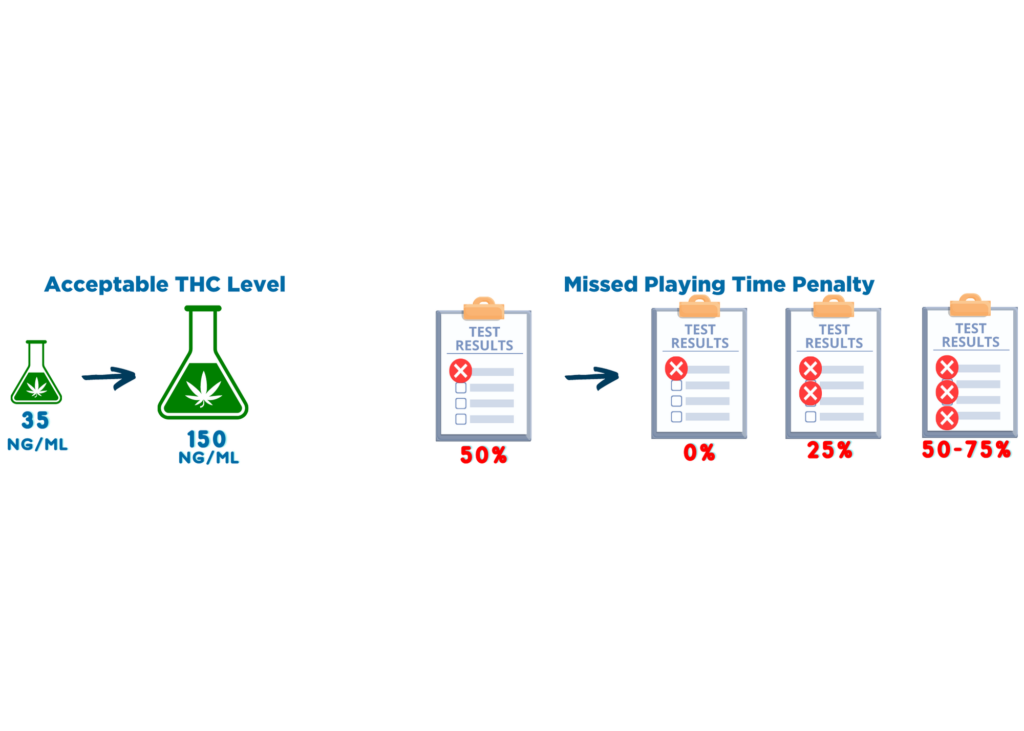
On February 25, the National Collegiate Athletic Association (NCAA) decided to relax their marijuana testing policies by increasing the amount of THC needed to be found in an athlete to produce a positive test. The previous threshold for a positive test of 35 nanograms per milliliter was increased to 150 nanograms per milliliter. The change became effective immediately and was retroactively applied to all drug tests taken in the fall semester of 2021. The NCAA’s goal for this change is to better align with the levels required by the World Anti-Doping Agency. With marijuana not being considered a performance-enhancing drug, the NCAA’s approach is to maintain consistency for the education of student-athletes “in a society with rapidly evolving public health and cultural views” pertaining to the use of cannabis.
New incremental penalties for subsequent positive tests in athletes are being proposed alongside these changes. Under old penalties, an athlete would miss 50% of regular-season events on their first failed test. A second positive drug test would result in the athlete missing a whole season.
With the new proposal, the school would implement an education and management plan after an athlete’s first positive drug test with the new proposal. If the athlete follows the management plan, the athlete will miss zero events. If the athlete did not follow the education and management plan and had subsequent positive drug tests, they would sit out on 25% and 50% of regular-season events.
Each NCAA division will have a vote for enacting the new proposals. Regardless, the policy changes and proposals are a step in the direction of aligning with policies of other athletic organizations, such as the NFL and MLB, as well as ever-changing societal views.
Our team of experts collaborate and share insights to keep
high-risk industries safe and compliant.