
As the cannabis industry has progressed, consumers have increasingly gravitated towards strains with high THC levels. Cultivators for years focused on breeding strains that would produce higher THC levels, but is that still the focus today?
Even though research is limited in the cannabis industry, it was clear that there had to be more to the plants than just the cannabinoid makeup because different strains with similar cannabinoid structures affect consumers very differently. One idea researchers are investigating is the “Entourage Effect.” This is the theory that cannabinoids and terpenes don’t work in isolation, but rather interact together to influence how cannabis feels in the body and mind. Terpenes are aromatic compounds found in many plants, like lavender, citrus peels, and pine trees; cannabis happens to be especially rich in them. While the entourage effect is still being studied and debated, early findings suggest that terpenes may help balance effects such as relaxation, alertness, and the stress response.
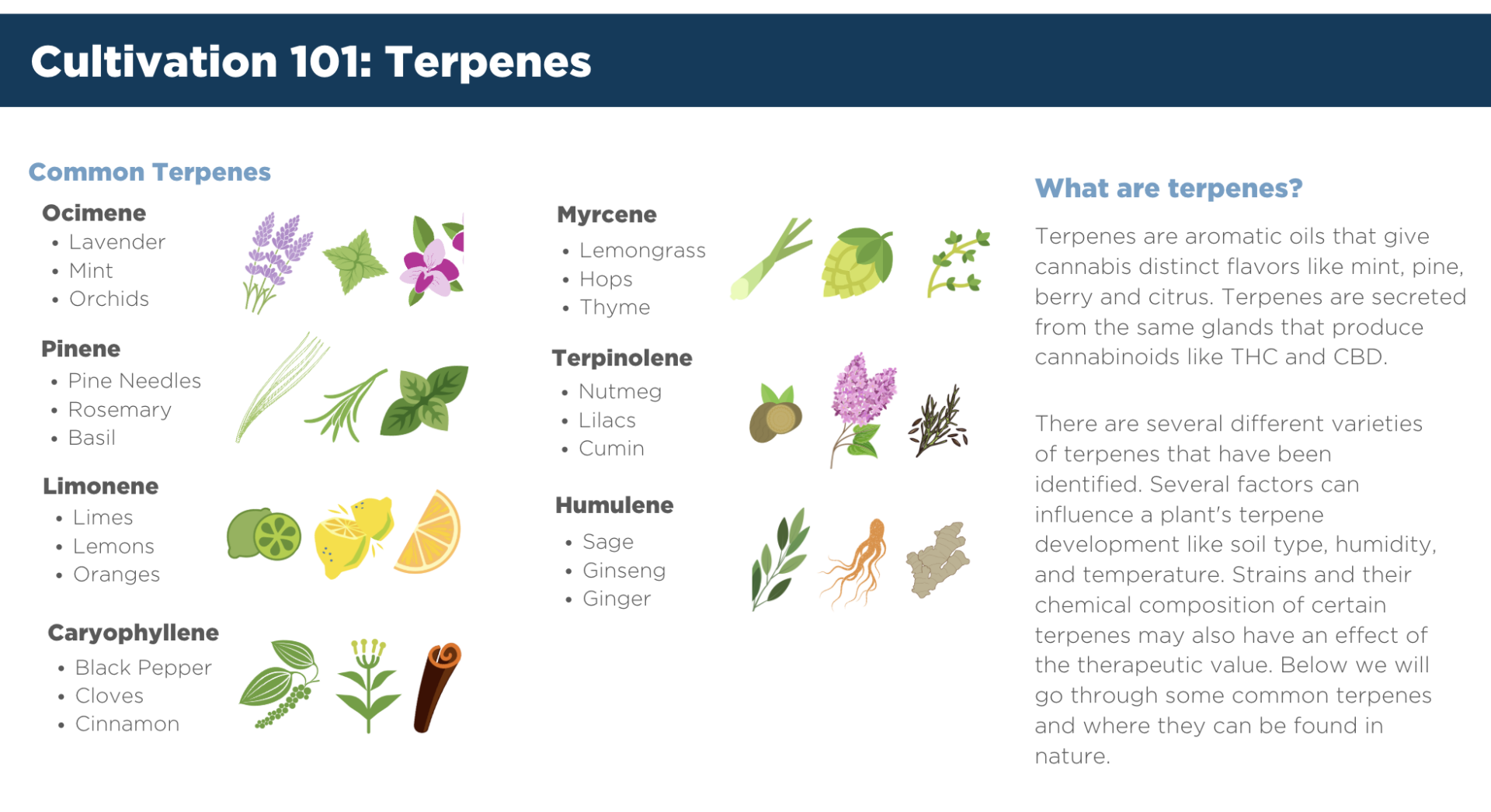
Different terpenes are associated with distinct potential effects. For example, Myrcene is often associated with earthy, musky aromas and is commonly found in strains people describe as relaxing. Limonene, which has a citrusy smell, has been studied for possible mood-lifting or stress-reducing properties. Pinene smells like pine and is being studied for its potential assistance with alertness and memory. Terpenes are not a magic cure, but they might help explain why two strains with similar THC levels can feel totally different.
Luckily, because terpenes are found throughout the plant world, scientists already have a decent foundation to work from, but the research specific to cannabis is still limited. Lab studies suggest some terpenes may have anti-inflammatory, antimicrobial, or antioxidant properties, though translating those findings into real-world cannabis use is still a work in progress. The hope is that if cannabis is moved to a Schedule 3 drug, there will be more federally funded research to help understand if the Entourage Effect is real or if there is more to the cannabis plant that we haven’t uncovered yet.
Our team of experts collaborate and share insights to keep
high-risk industries safe and compliant.